


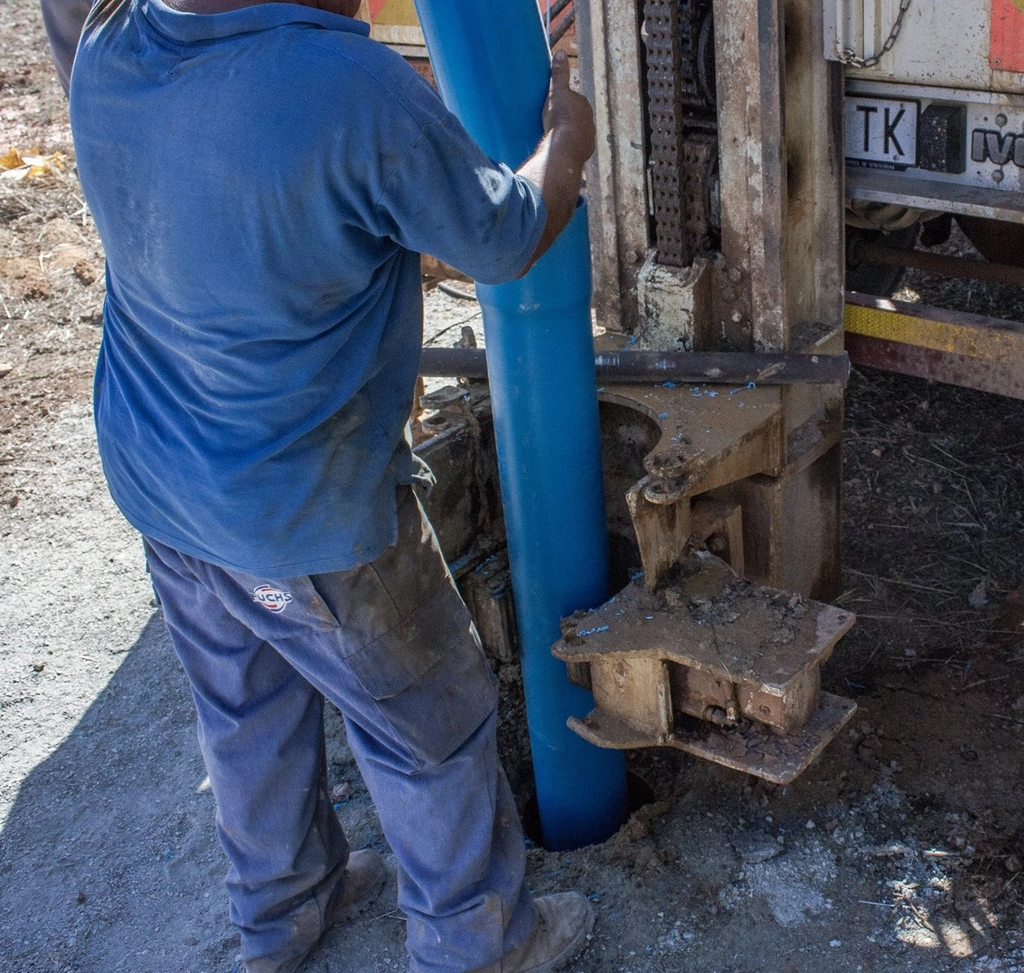
The longevity and performance of a groundwater well depend as much on the installation quality as they do on the pipe quality. Even the most durable U-PVC pipes can fail if handled incorrectly during storage or drilling.
To ensure a seamless operation, follow these 19 industry-standard guidelines for Hasspipe U-PVC systems.
1. Safe Handling and Storage
- Avoid Impact: Never drop or strike pipes against the ground during loading and transportation. Protecting the threaded ends is critical for leak-proof joints.
- Sun Protection: Store pipes on wooden sleepers and keep them covered. Direct sunlight (UV exposure) and extreme heat can cause deformation over time.
- Thread Safety: Keep the protective caps on the male threads until the exact moment the pipe is lowered into the well.
2. Pre-Installation Inspection
- Visual Audit: Conduct a final inspection before lowering each pipe. Any pipe with visible defects or cracks should be discarded immediately.
- Compatibility: Ensure the borehole diameter and the pump size are fully compatible with the chosen pipe dimensions.
3. Jointing and Assembly
- No Grease or Oil: Never use grease or oil to ease thread entry. If needed, simple soapy water is sufficient.
- Avoid Adhesives: Never apply glue or adhesive to threaded joints. Adhesives can degrade the material and ruin the thread integrity.
- Proper Tooling: Use strap wrenches or similar tools that do not scratch or damage the U-PVC surface during tightening.
4. Lowering into the Borehole
- Centralizers: Use a centering spring (centralizer) every 8 meters to ensure the casing stays perfectly vertical. It is vital to have one at the very bottom on the blind pipe.
- Smooth Descent: If the pipe slows down during lowering, fill it with drilling mud via a hose or bucket to add weight. Never use force or hammers to drive the pipe down.
- Clearing Obstructions: If the pipe gets stuck, pull it back and try again. If it still won’t descend, re-drill/clear the hole with the drill bit before retrying.
5. Positioning and Gravel Packing
- The “Suspension” Rule: Once the pipe touches the bottom, lift it at least 10 cm and keep it suspended. This ensures the string remains straight until gravel packing is complete.
- Uniform Graveling: Pour gravel continuously and evenly around the casing using a shovel. This provides uniform support and maintains verticality.
- Watch for “Bridging”: In silty soils, ensure the gravel doesn’t form a “bridge.” If silt keeps entering the well but the gravel level isn’t dropping, a bridge has formed—take immediate action to break it, or the well may collapse.
6. Pump Placement and Load Management
- Load Separation: Never rest the weight of the pump or heavy steel fittings directly on the U-PVC pipe.
- Surface Casing: Use a steel collar/casing at the wellhead. The pump should be supported by this steel structure, not the PVC casing, to prevent structural fatigue and damage to the gravel pack.
Conclusion
Every stage of well construction—from site selection to pipe installation—should be guided by scientific data and technical precision. By following these steps, you protect your investment and ensure a clean water supply for decades.
Every stage of well construction—from site selection to pipe installation—should be guided by scientific data and technical precision. By following these steps, you protect your investment and ensure a clean water supply for decades.

Leave A Comment