


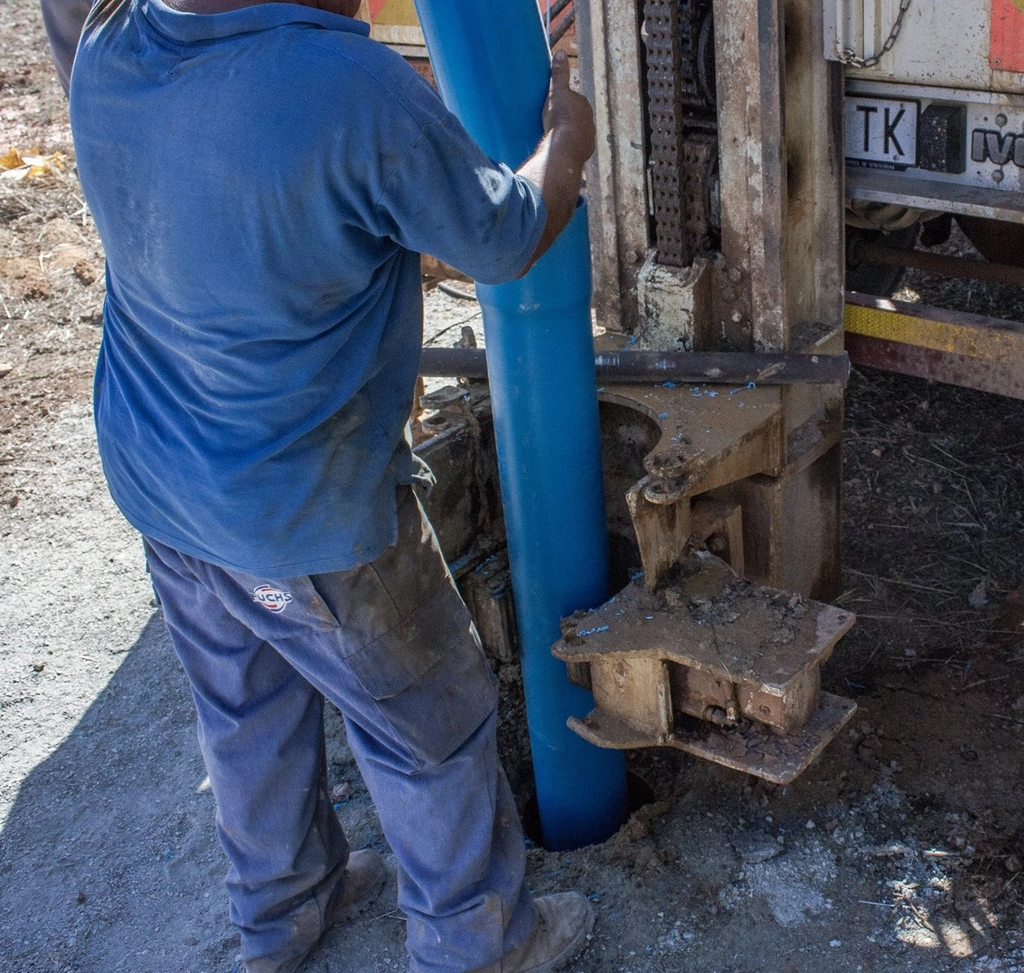
A u-pvc well casing is a rigid, specialized plastic tubular structure designed to line boreholes, secure well walls against collapse, and protect extracted groundwater from surface contamination. As of 2026, the longevity and performance of a groundwater well depend equally on the pipe quality and the precise u-pvc well casing installation methodology. Even the most durable U-PVC pipes can suffer catastrophic failure if handled incorrectly during storage or drilling operations. This authoritative guide breaks down the critical phases of well construction, from safe material handling and adhesive-free jointing to proper gravel packing and load management, ensuring a seamless operation and a clean water supply for decades.
What is a U-PVC Well Casing
A u-pvc well casing is an unplasticized polyvinyl chloride pipe installed inside a drilled borehole to maintain structural integrity and house pumping equipment. This casing directly isolates the clean aquifer from unstable soil layers and prevents sediment infiltration. The most critical factor in utilizing this material is adhering strictly to technical installation protocols.
Industry data shows that proper structural support guarantees decades of clean water supply. These pipes provide high resistance to corrosion and chemical degradation. Ultimately, u-pvc well casing pipes deliver superior cost-efficiency compared to traditional metallic alternatives when installed correctly.
Pre-Installation: Safe Handling and Storage
Proper pre-installation handling involves storing U-PVC pipes on horizontal wooden sleepers under protective covers to prevent physical and environmental damage. Installers must conduct a 100% visual audit before lowering, immediately discarding any pipe showing visible defects or structural cracks.
Direct sunlight exposure causes severe UV degradation and material deformation over time. Furthermore, protecting the threaded ends is absolutely critical for establishing leak-proof joints. Technicians must keep the original protective caps securely on the male threads until the exact moment the pipe is lowered into the borehole. Never drop or strike these pipes against the ground during transport.
Jointing and Assembly Rules for PVC Well Casings
The definitive rule for assembling pvc well casing pipes is to never use grease, oil, glue, or chemical adhesives on the threaded joints. Chemical adhesives degrade the unplasticized material and permanently ruin the thread integrity.
How to Lower PVC Casing into the Borehole
To successfully lower a pvc well casing, installers must attach a centering spring every 8 meters along the pipe string to ensure the structure remains perfectly vertical. It is vital to attach one centralizer at the very bottom on the blind pipe.
If the pipe slows down during its descent, operators should add weight by filling the internal cavity with drilling mud using a hose. You must never use external force or hammers to drive the pipe downward. If the pipe gets stuck, pull it back; if it remains obstructed, you must clear the hole with a drill bit before retrying.
Positioning and Gravel Packing Techniques
The standard “suspension rule” dictates that once the pvc well casing touches the bottom of the borehole, operators must lift and suspend it by at least 10 cm. This vital suspension ensures the entire string remains perfectly straight until the gravel packing phase is fully complete.
Installers must pour the gravel continuously and evenly around the casing using a shovel to provide uniform structural support. During this process, operators must actively watch for “bridging” in silty soils. If silt enters the well but the gravel level fails to drop, a bridge has formed; technicians must take immediate action to break it to prevent total well collapse.
Pump Placement and Load Management
Proper load management requires supporting the heavy water pump with a sturdy steel collar or surface casing positioned at the wellhead. Installers must never rest the weight of the pump or heavy steel fittings directly on the U-PVC pipe.
Transferring this heavy mechanical load to the steel structure prevents structural fatigue and eliminates potential damage to the underlying gravel pack. Every stage of this construction process must be guided by scientific data and precise technical execution.
Material Comparison: U-PVC vs. Standard PVC vs. Steel
Choosing between materials requires analyzing load-bearing capacity, corrosion resistance, and installation weight. The following table outlines the 3 primary materials used in modern well construction based on key performance attributes.
Material Type | Corrosion Resistance | Installation Weight | Jointing Method |
U-PVC | Excellent (Chemical inert) | Light | Threaded (No Adhesives) |
Standard PVC | High | Light | Solvent Welded (Adhesives) |
Carbon Steel | Low (Prone to rust) | Very Heavy | Welded / Threaded |
Standard PVC utilizes chemical glues, which are strictly prohibited for deep well water applications, making U-PVC the superior choice for uncompromised groundwater purity.
Does a well casing go all the way down?
A well casing generally goes down until it reaches solid bedrock or the target aquifer depth, but it does not always hit the absolute bottom of the drilled hole. A screened section is often placed at the bottom to allow clean water to enter while filtering out sediment.
Can you use schedule 40 PVC for well casing?
Using schedule 40 PVC for deep well casing is not recommended because its thin walls cannot withstand high external collapse pressures. Specialized, thicker-walled U-PVC well casings are required to prevent structural failure at depth.
Is PVC better than steel for well casing?
PVC well casing is better than steel in environments with highly corrosive groundwater because it will never rust or scale. However, steel is structurally superior for extremely deep boreholes that generate massive geological crushing pressures.
What happens if your well casing is cracked?
If your well casing is cracked, surface contaminants, silt, and harmful bacteria will infiltrate your clean water supply. A cracked casing requires immediate remediation, which usually involves installing a smaller PVC well casing liner inside the damaged pipe.
How is casing installed in a well?
Casing is installed by threading sections of pipe together and smoothly lowering them into the borehole using centralizers. Once positioned, the annular space is uniformly packed with gravel to secure the pipe and filter incoming water.

Leave A Comment