


In deep-well drilling, selecting the right well casing pipe is a balance between hydraulic efficiency and structural survival. While column pipes handle the internal pressure of the pump, well casing pipes must withstand the immense external forces of the earth. Understanding Critical Collapse Pressure (Pk) is essential to prevent the well from caving in.
Why Deep Wells Need High-Integrity Casing
As drilling depths increase, the geological formations exert varying levels of stress. While vertical stress (Sv) increases with depth, it is the horizontal stress (Sh) that often leads to pipe failure.
Factors that amplify these lateral forces include:
- Tectonic movements and geological faulting.
- The plastic behavior of certain rock layers.
- Thermal expansion due to ambient temperature changes.
For a reliable, long-lasting borehole, your U-PVC well pipes must be selected based on these calculated horizontal stresses.
The Mathematics of Resistance
The safety of a well depends on the pipe’s ability to resist external pressure until its limit, known as the Critical Collapse Pressure (Pk). This is calculated using the following engineering formula:
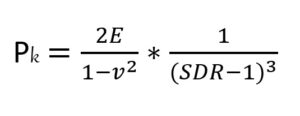
- E (Modulus of Elasticity): Reflects the material’s rigidity.
- v (Poisson’s Ratio): The ratio of transverse to axial strain.
- SDR (Standard Dimension Ratio): The ratio of the pipe’s outer diameter to its wall thickness (D/t).
Technical Insight: For projects requiring Slotted Screen Pipes, remember that the filter openings reduce the Pk to approximately 50% – 70% of a plain pipe’s strength.
- 100 Meters Series (Plain): Ideal for shallow-to-medium depths with standard geological conditions.
- 300 Meters Series (Plain): Engineered for high-pressure deep well applications where collapse resistance is paramount.
- U-PVC Solvent Cement Socketed Pipes: Perfect for permanent, leak-proof casing joints that require high structural integrity without the vulnerability of threads.



Leave A Comment